
Insulated concrete and Latham fiberglass pools, built for Minnesota. Serving the Twin Cities metro.
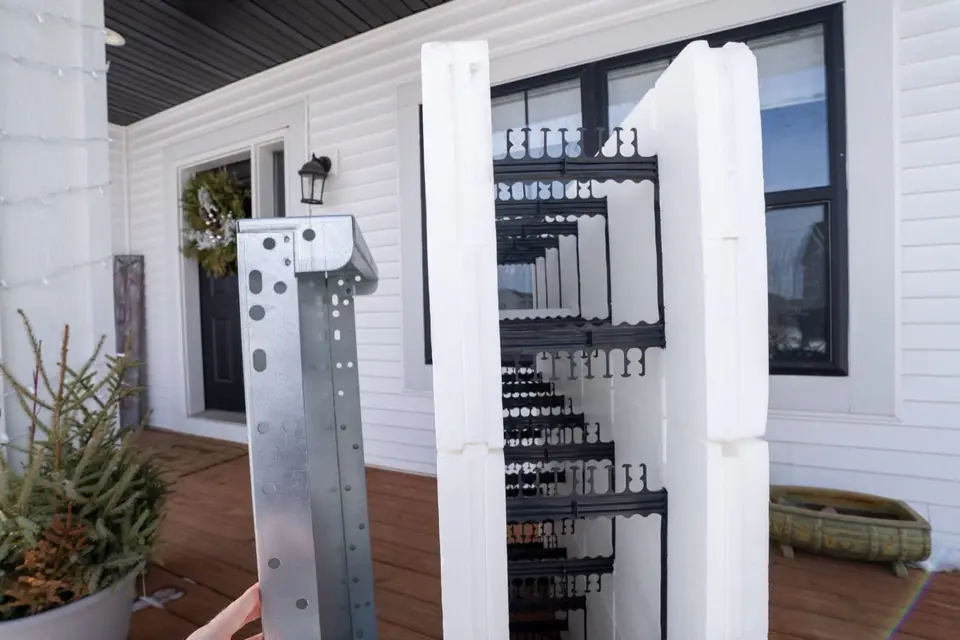
Learn why we build with insulated concrete forms instead of steel wall pool forms, and what it means for your water, your deck and your heating bill.
Sound familiar?
Most Minnesota families want a pool that handles our winters, but finding one is hard because typical builders still sell steel wall pools that lose heat into the ground.
Don't get stuck heating a pool you can barely swim in.
Book a Consultation →What's hiding behind the liner
Once your pool is finished you'll never see its walls again, so this is the moment to look. Most swimming pool builders still use thin galvanized steel panels. We build every wall from insulated concrete forms: thick foam on both sides, steel rebar and solid concrete poured in the middle.
Inside the wall
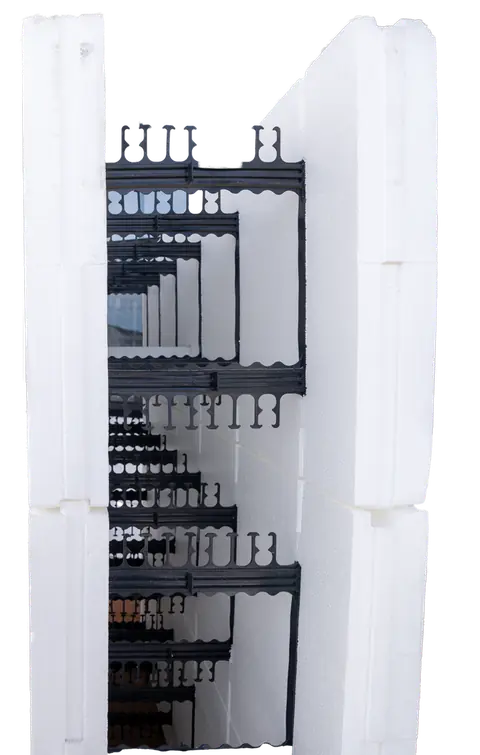
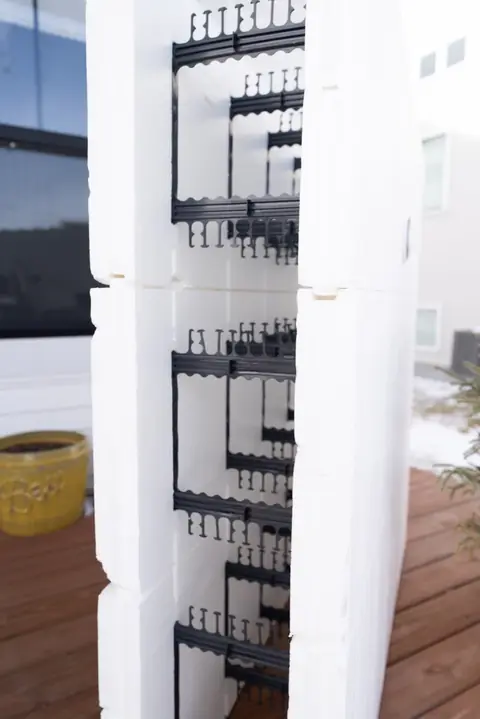
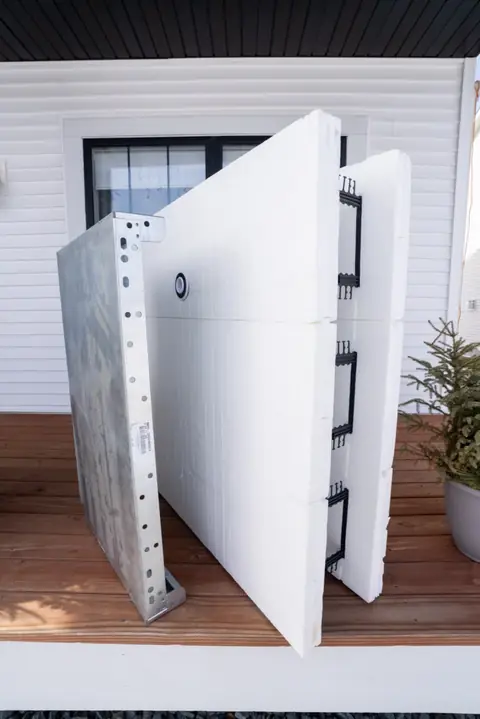
Cut a Plan Pools wall in half and this is what you see. Two layers of foam insulation with steel rebar and solid concrete in between. Cold ground stays out. Heat stays in your water.
Concrete vs. steel wall construction
Two layers of thick, hardened foam surround the concrete. That double insulation often cuts heating costs by 60%, so you swim longer for less.
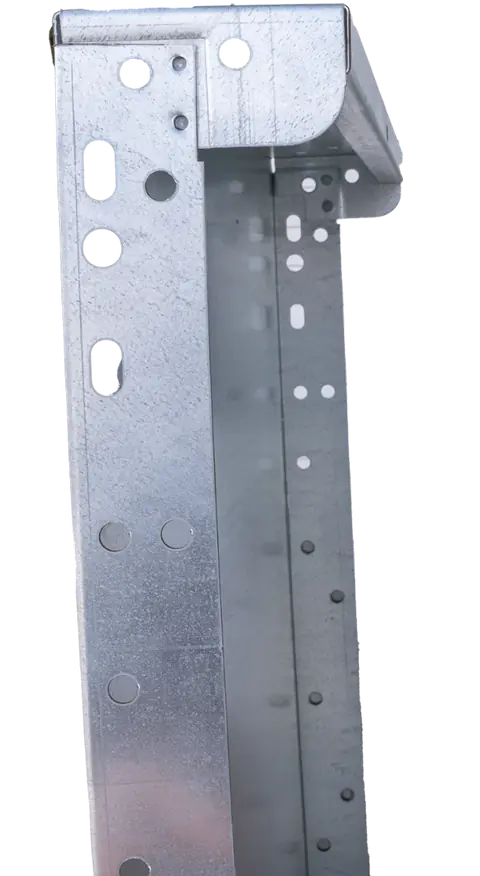
Steel is a great conductor of heat. The vinyl liner next to a steel wall efficiently draws heat out of the water, which means a higher cost of heating and ownership.
Two ways to build
Plan Pools builds both for Twin Cities backyards. Learn how each one works, then we'll help you pick the right fit for your yard and budget.
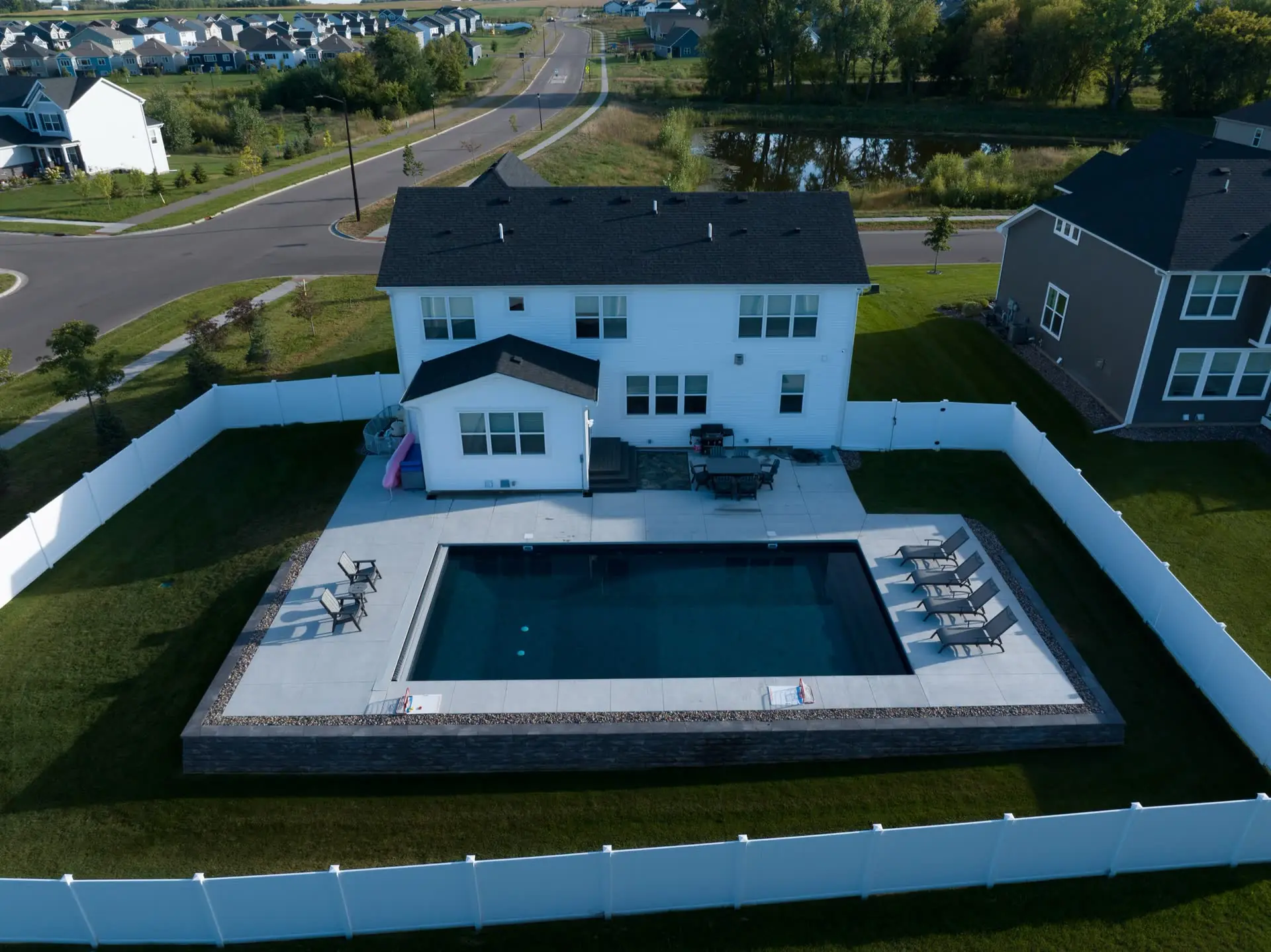 Fully custom
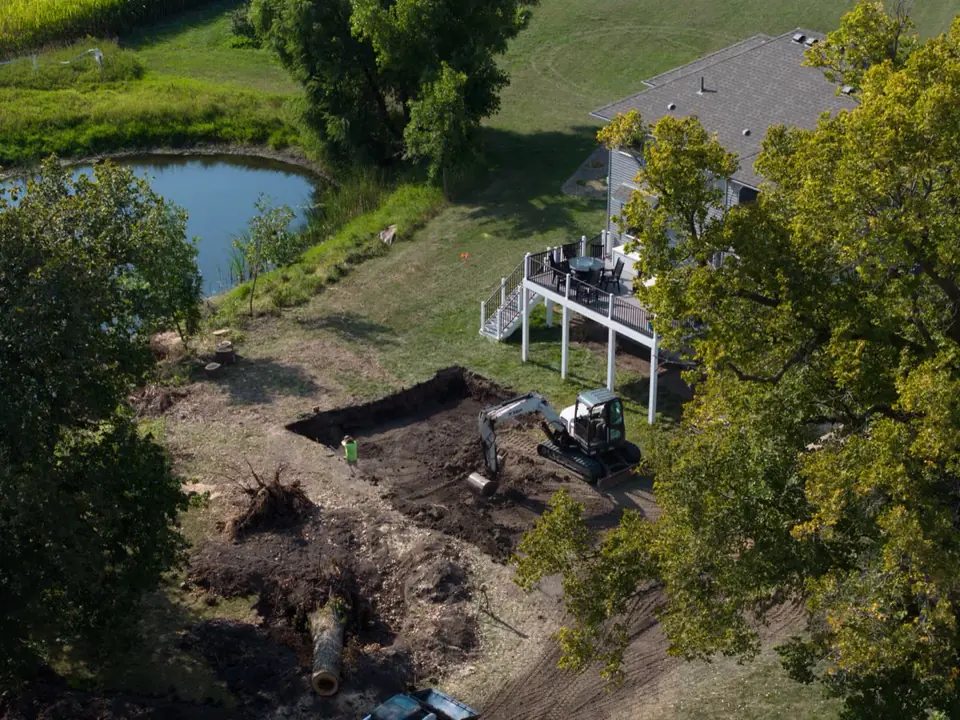
Insulated concrete walls built in place on your lot, in any shape, size or depth.
 New at Plan Pools
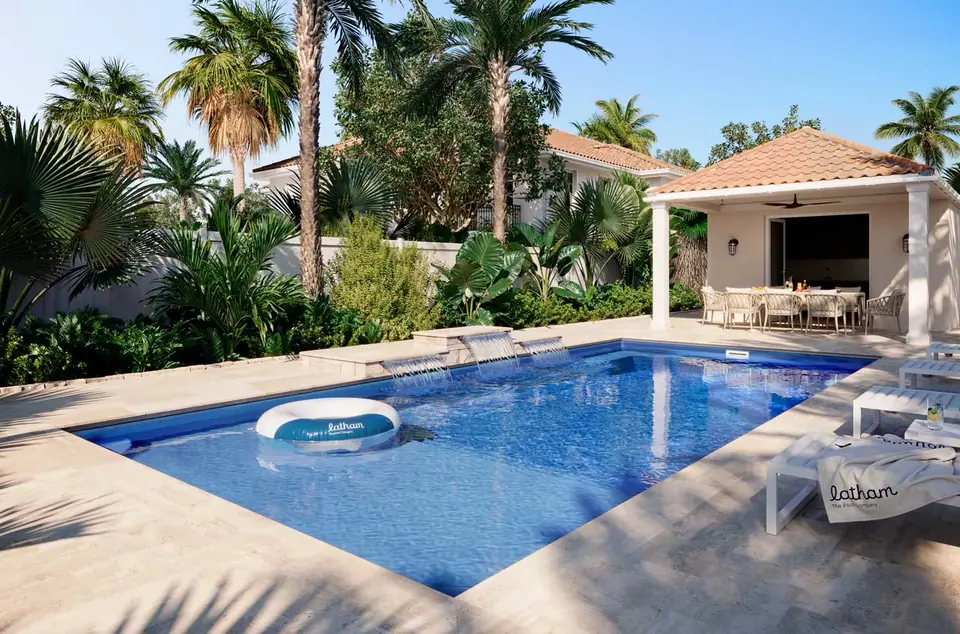
A one-piece Latham shell, built in the factory and set in your yard in about 7 days.
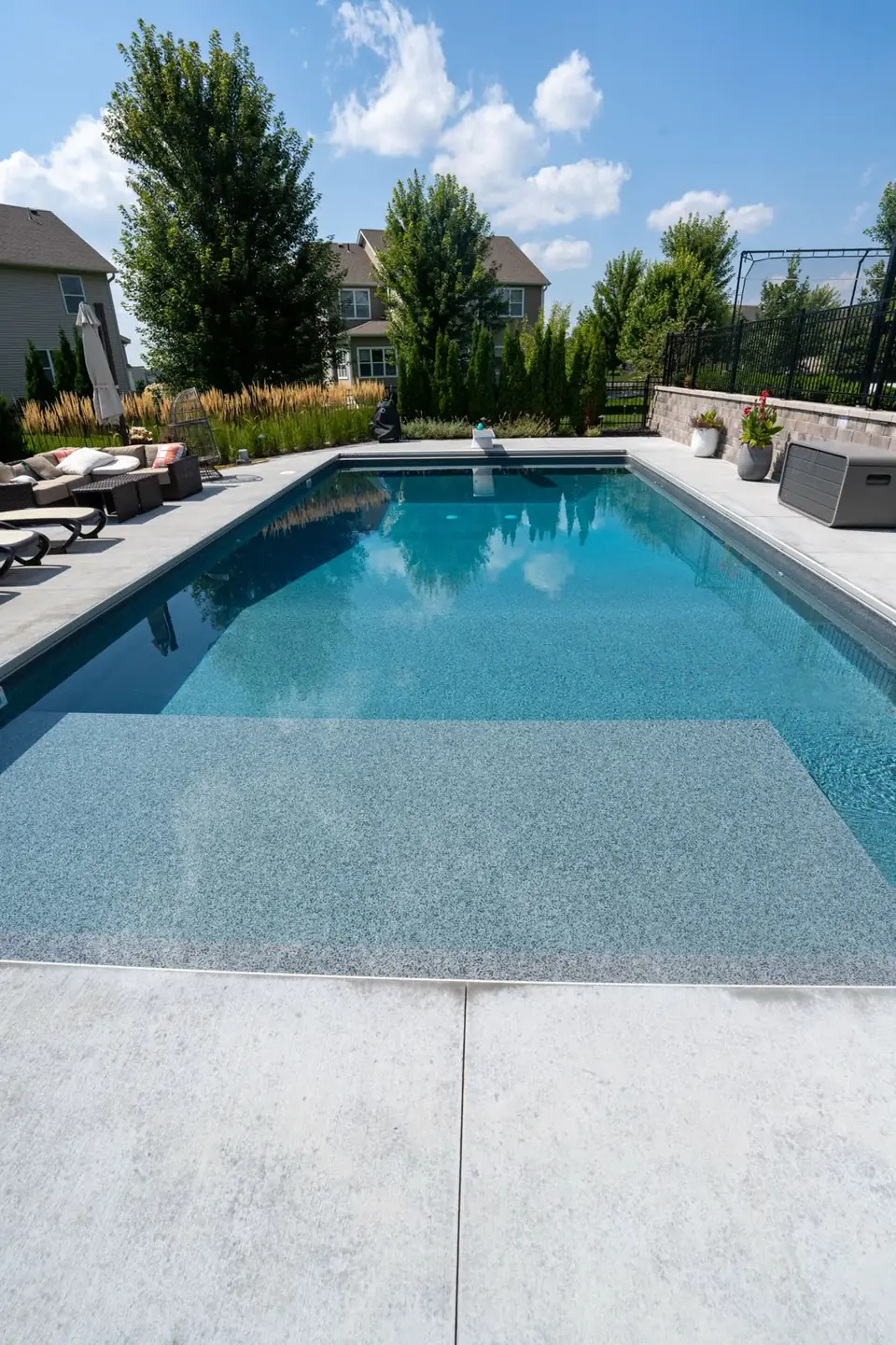
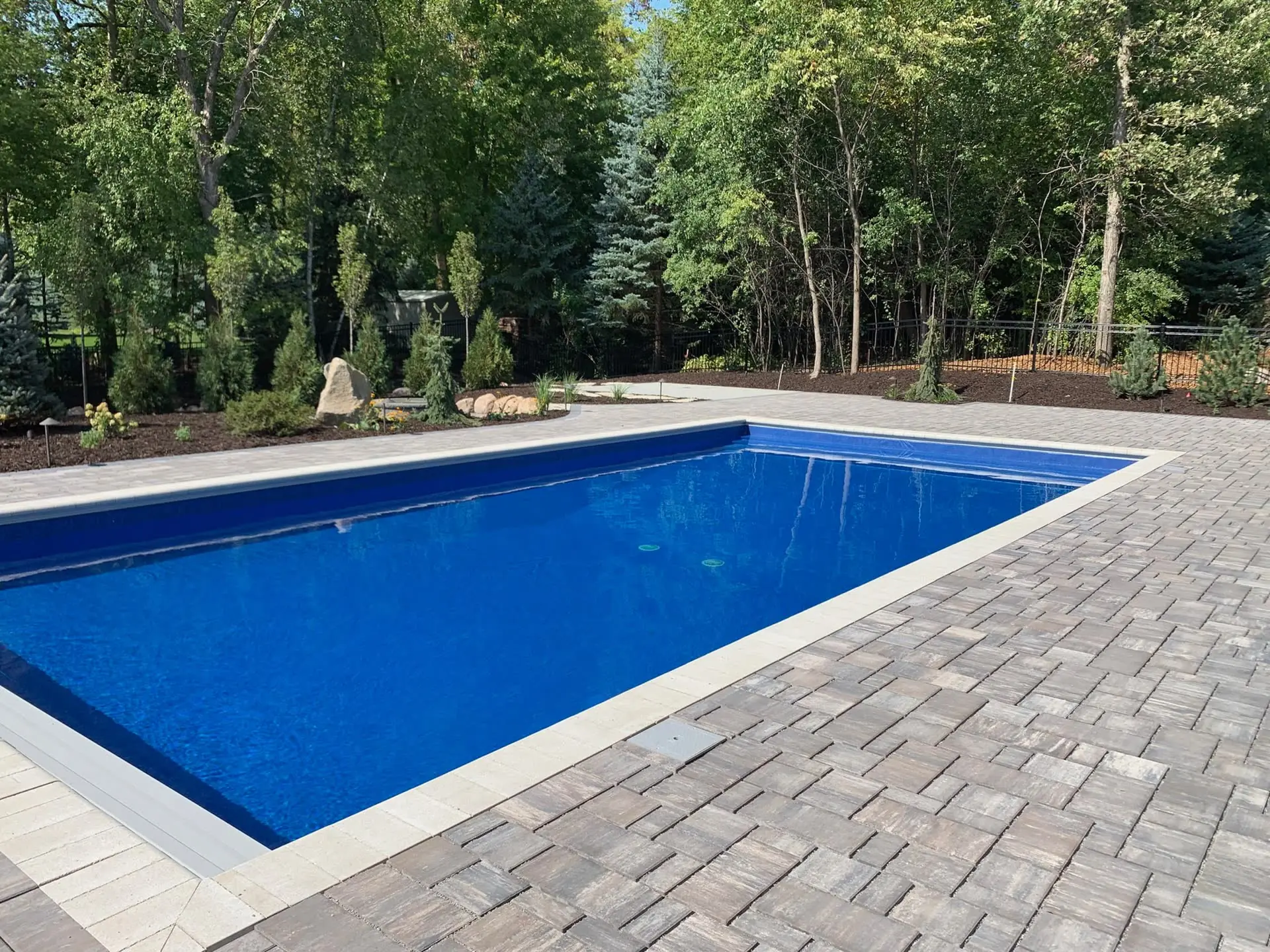
On a real Plan Pools build
Hollow foam blocks are stacked to form the walls, reinforced with steel rebar, then filled with concrete. The result is a solid wall with insulation on both sides.
The details
When you're finally ready to build a pool, do everything you can to maximize your enjoyment and the lifespan of the project.
ICF walls have two layers of thick, hardened foam. Steel is a great conductor of heat, so the liner next to a steel wall draws heat out of the water. Lower heating costs mean you'll open sooner in spring and keep the pool open longer in fall.
Salt water systems beat chlorine for many reasons, but steel walls don't mix well with them. Steel can rust and erode, leading to leaks and eventually catastrophic failures.
Steel walls need support braces behind them, and those braces keep the builder from compacting the soil. Poor compaction leads to heaving and shifting, and your deck can split. ICF allows full backfill and compaction.
Our walls are thicker than steel, giving you a deeper pool. And because steel wall pools usually come as kits, they limit your options. Concrete lets us get the most out of your yard.
What you get
ICF changes what owning a pool feels like, season after season.
so you can swim weeks before the neighbors.
so you can keep the water warm without wincing at the bill.
so you can trust your walls for decades.
so Minnesota winters don't shift your pool out of shape.
so you can count on a lifetime structural warranty.
so you can plan without surprises.
Choose carefully
The walls are the one thing you can never change later. Choose them carefully.
Some builders still install steel walls, leaving you with rust risk and winter movement for decades.
Some pool companies quote low and make it up later, leaving you over budget before the water's in.
An uninsulated pool costs more to heat, so you swim fewer days for more money.
Some contractors disappear after the pool, leaving you with dirt, ruts and a yard nobody uses.

The payoff
That's the whole point of building it right.
Questions, answered
What families ask us most about insulated concrete pools.
Ask us anything →An ICF pool has walls made from insulated concrete forms filled with concrete and rebar.
The insulation keeps water warmer, and the concrete core stands up to Minnesota winters. See what is included.
For Minnesota, we think so. ICF walls are insulated and steel walls are not.
That means up to 60% lower heating costs and no wall rust. Compare them in our services.
The structure is backed by a lifetime warranty.
Ask us for the details when you book a consultation.
The pool setup and system runs $90K to $125K.
Most full projects land between $100K and $200K with landscaping. See financing options.
We build across the Twin Cities metro.
Start with Lakeville, Shakopee, Rosemount or see every city we serve.
Get your backyard oasis
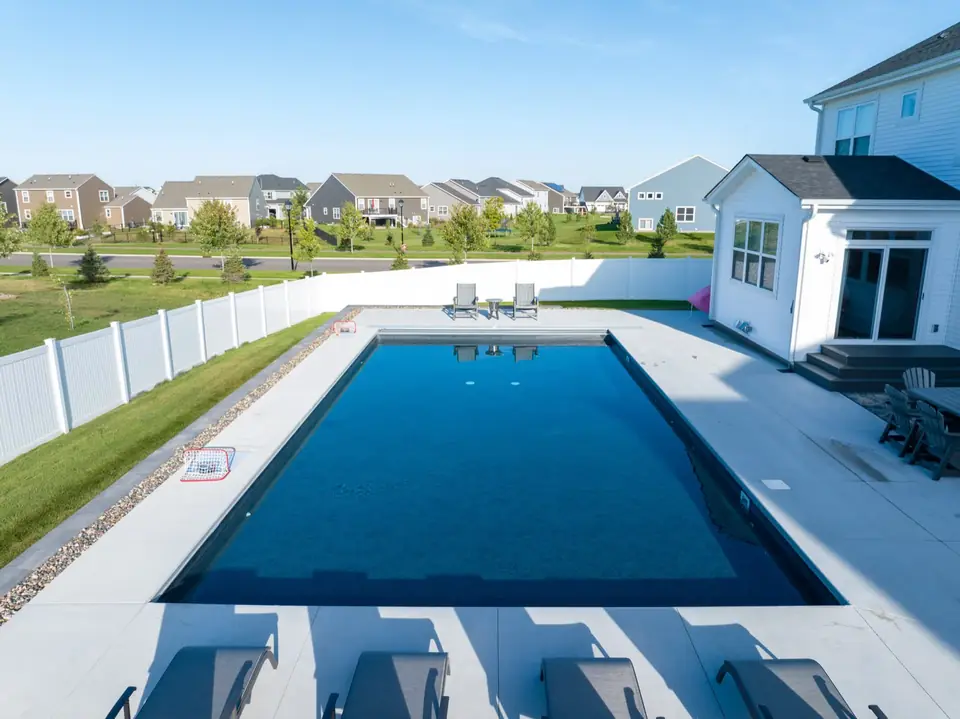
Few things bring family and friends together like an evening at the pool. Book a no-pressure consultation and finally spend summer at home. Or text Joe a few photos of your yard.